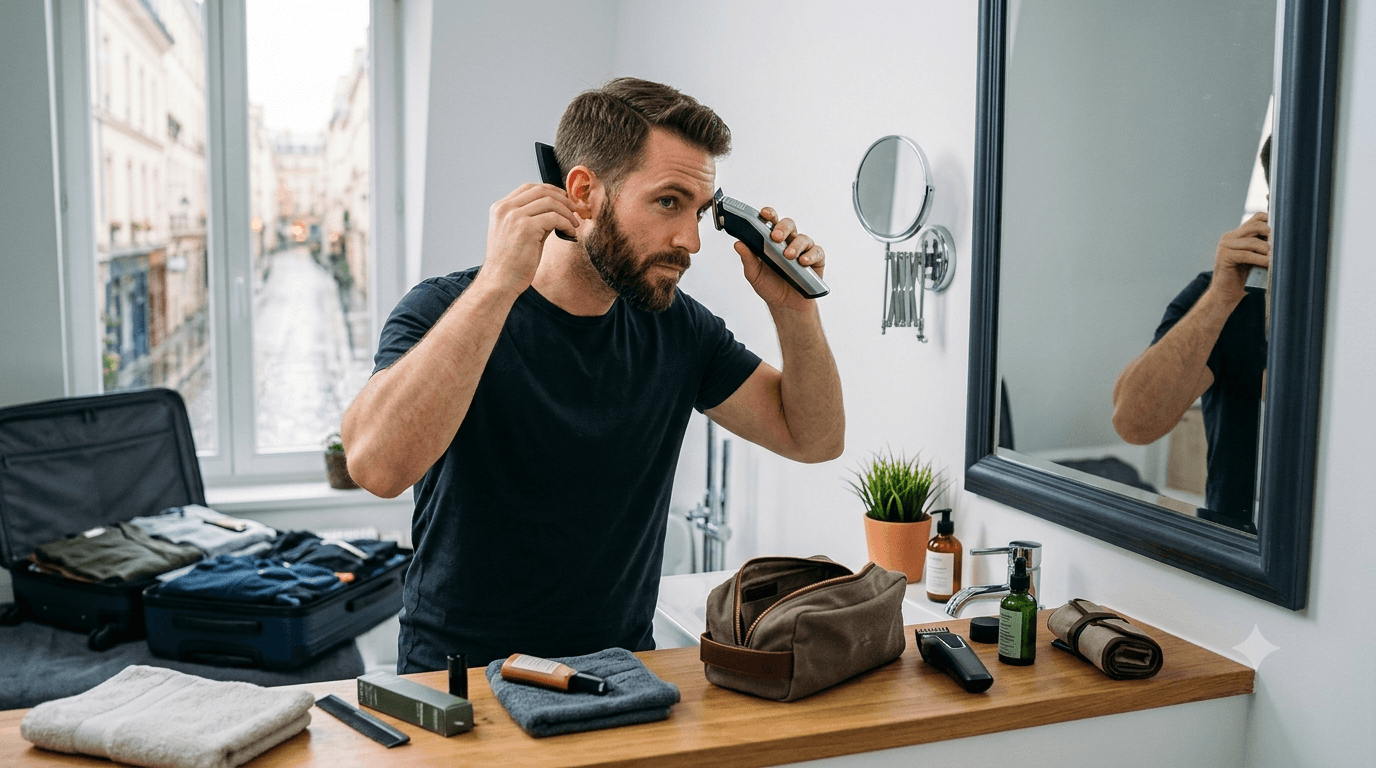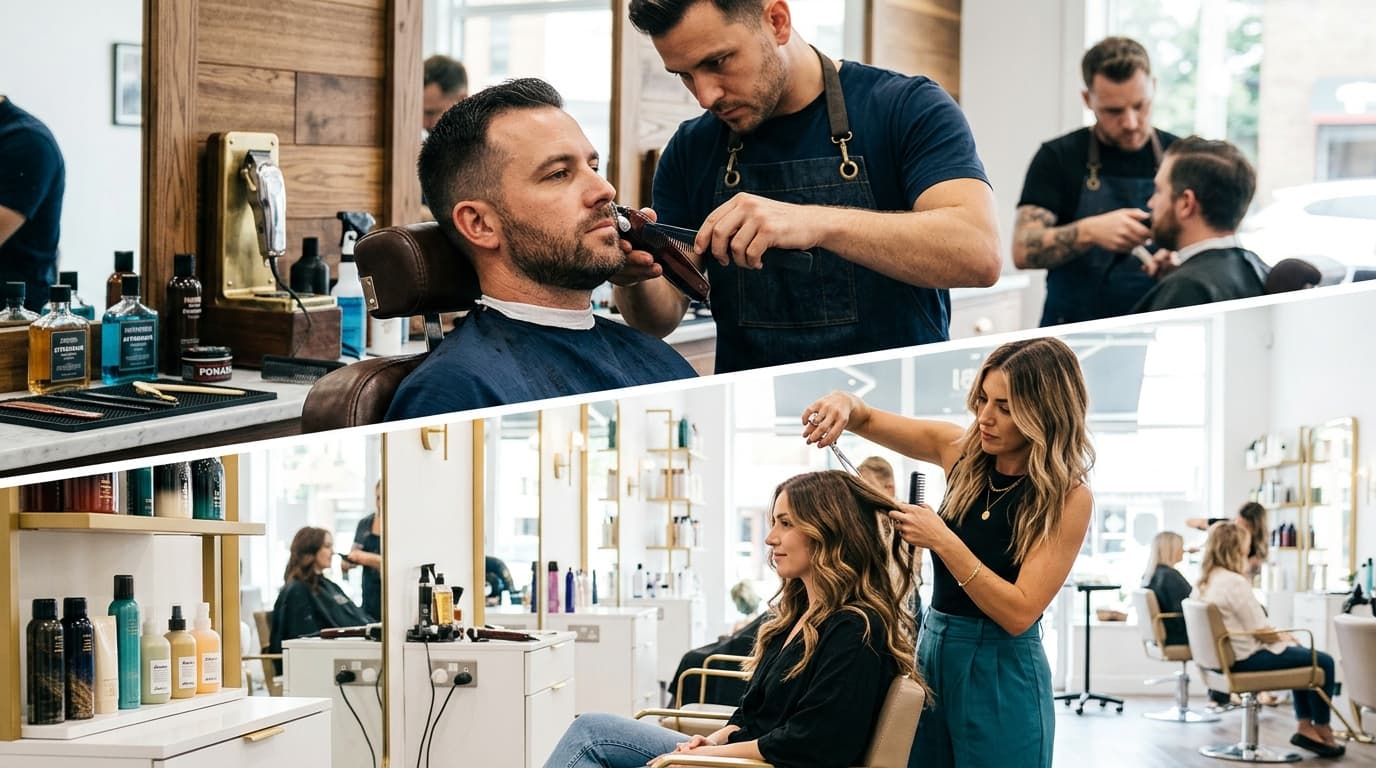
Standing in front of two shopfronts—one with a spinning red-and-white pole, the other with sleek chairs and rows of colorful products—you might wonder which door leads to the haircut you actually want. Barbers and salons both cut hair, but they are built around different skills, traditions, and clients. Choosing the right one saves you money, time, and the frustration of an awkward grow-out.
What Is a Barber?
A barber specializes in shorter hairstyles, classic cuts, and grooming for the face and neck. Barbering is a craft with deep roots, historically tied to men's grooming, and today it remains the go-to for precise, structured looks.
Typical Barber Services
Clipper and fade work—tapers, skin fades, buzz cuts, and crew cuts
Scissor cuts for short-to-medium hair
Beard trims and shaping, including hot-towel straight-razor shaves
Line-ups and edging around the hairline and neck
Quick, walk-in-friendly appointments
Barbers train intensively on clipper technique and blending. If you want a tight fade or a crisp neckline, this is the specialist you're looking for.
What Is a Salon?
A hair salon offers a broader menu that centers on styling, chemical services, and longer hair. Salons welcome all genders and focus heavily on color, texture, and transformation.
Typical Salon Services
Cutting and styling for all lengths, especially medium to long
Coloring—highlights, balayage, full color, and gray coverage
Chemical treatments like perms, relaxers, and keratin smoothing
Blowouts, updos, and event styling
Conditioning treatments and scalp care
Salon stylists are trained across color chemistry, long-hair layering, and finishing techniques that make a style hold for a special occasion.
Barber vs Salon: The Key Differences
The two overlap, but their priorities differ. Here's how they compare across the things that matter most.
1. Specialization
Barbers master short cuts and fades; salons master length, color, and chemical work. Neither is "better"—they're optimized for different results.
2. Atmosphere
Barbershops tend to feel casual, quick, and social. Salons often lean relaxed and pampering, with more time built into each appointment.
3. Pricing
Barber cuts are usually faster and more affordable. Salon services cost more, largely because color and chemical treatments take more time, product, and expertise.
4. Booking Style
Many barbershops accept walk-ins. Salons typically prefer appointments, especially for color that can run several hours.
Which One Do You Need?
The right choice comes down to the result you want. Use this quick guide.
Choose a Barber If You Want To:
Get a fade, taper, or short classic cut
Maintain a beard or get a straight-razor shave
Pop in quickly without a long appointment
Keep costs low for regular upkeep
Choose a Salon If You Want To:
Add or change your hair color
Style, cut, or layer medium-to-long hair
Get a perm, relaxer, or smoothing treatment
Prep for a wedding, photo shoot, or big event
Rule of thumb: if the magic happens with clippers, book a barber. If it happens with color or length, book a salon.
Can't Decide? Consider a Hybrid
Plenty of people split their routine: a barber every few weeks for a clean fade, and a salon a few times a year for color or a bigger restyle. Many modern shops also blur the line, offering both barbering and salon services under one roof. If you find a stylist who does exactly what you need, the label on the door matters far less than their skill.
How to Choose a Great One
Look at their portfolio—photos should match the style you want.
Read reviews for consistency, not just a high average.
Have a consultation before any big change, especially color.
Communicate clearly—bring reference photos every time.
A Quick History: Why the Two Split
For centuries, the barber was a fixture of daily life—not just cutting hair but shaving beards and, in earlier eras, performing minor surgeries and tooth extractions. That red-and-white pole is a relic of this past: the colors traditionally symbolized blood and bandages. Over time, medicine separated from grooming, and the barber narrowed into a master of the cut and the shave.
The modern salon grew from a different tradition, one centered on styling, fashion, and the chemistry of color. As hair dye, perms, and blow-drying tools evolved through the twentieth century, salons became laboratories of transformation. Understanding these roots explains why the two feel so different today: one is built on precision and routine, the other on reinvention and artistry.
How Often Should You Go?
Frequency depends entirely on your style and hair type. A fresh fade looks its best for a short window, while a long, layered cut can coast for months. Use these general guidelines as a starting point.
Barber Visits
Skin fades and tight tapers: every 2–3 weeks to keep edges crisp
Classic short cuts: every 4–6 weeks
Beard maintenance: every 1–2 weeks for a shaped look
Salon Visits
Trims for long hair: every 8–12 weeks to manage split ends
Root touch-ups for color: every 4–6 weeks
Balayage or highlights: every 3–4 months, since regrowth is softer
If your budget is tight, stretching the time between visits works better for salon color than for a sharp fade, which grows out visibly fast.
What to Know Before Your First Visit
A little preparation makes any appointment smoother and dramatically improves your odds of loving the result.
Arrive with clean, dry-ish hair unless a wash is included—stylists can read your natural texture more easily.
Know your vocabulary, or skip it and show a photo. "Take a little off" means different things to different people.
Be honest about upkeep. A style you won't maintain at home rarely looks good after a week.
Ask about pricing up front, especially for color, where costs vary with length and thickness.
Tip appropriately if it's customary where you live; good work and loyalty are worth rewarding.
Common Myths, Cleared Up
A few persistent misconceptions steer people toward the wrong chair.
"Barbers only serve men." Not true—anyone wanting a short, structured cut can benefit from a barber's clipper skills. "Salons are always expensive." Prices vary widely; a simple salon trim can rival a barber's rate. "A cheap cut is always a bad cut." Skill, not price, decides the outcome; a talented barber at a modest shop can outshine a pricey stylist who rushes. The smartest approach is to judge the person and their portfolio, not the label on the storefront.
Real-World Scenarios: Which to Pick
Sometimes the clearest way to decide is to picture your actual situation. Here are common cases and the smart move for each.
You have a job interview on Friday and want to look sharp. Book a barber for a clean, structured cut and a tidy neckline—fast, reliable, and polished.
You're bored and craving a whole new look with color. This is salon territory. Book a consultation first so the colorist can assess your hair's history and health.
You grow out your hair but want it shaped every couple of months. A salon stylist skilled in layering will keep length looking intentional rather than shapeless.
You keep a short buzz and a groomed beard. A barber on a regular two-to-three-week rhythm is your ideal, most economical choice.
You're prepping for a wedding as the one getting married or a guest. A salon handles updos, blowouts, and long-lasting event styling far better than a quick chair.
When your needs span both worlds—say, a fade now and color next month—there's no rule against using both. The goal isn't loyalty to a storefront; it's the right specialist for the result in front of you. Keep notes on who nailed which look, and you'll build a small roster of trusted hands for every occasion.
The Bottom Line
Barbers and salons aren't rivals so much as specialists. A barber is your best bet for short, sharp, clipper-driven looks and facial grooming. A salon is where you go for color, chemical services, and longer, styled hair. Match the place to the result you want, and you'll walk out happy—no matter which pole or product wall you passed on the way in.